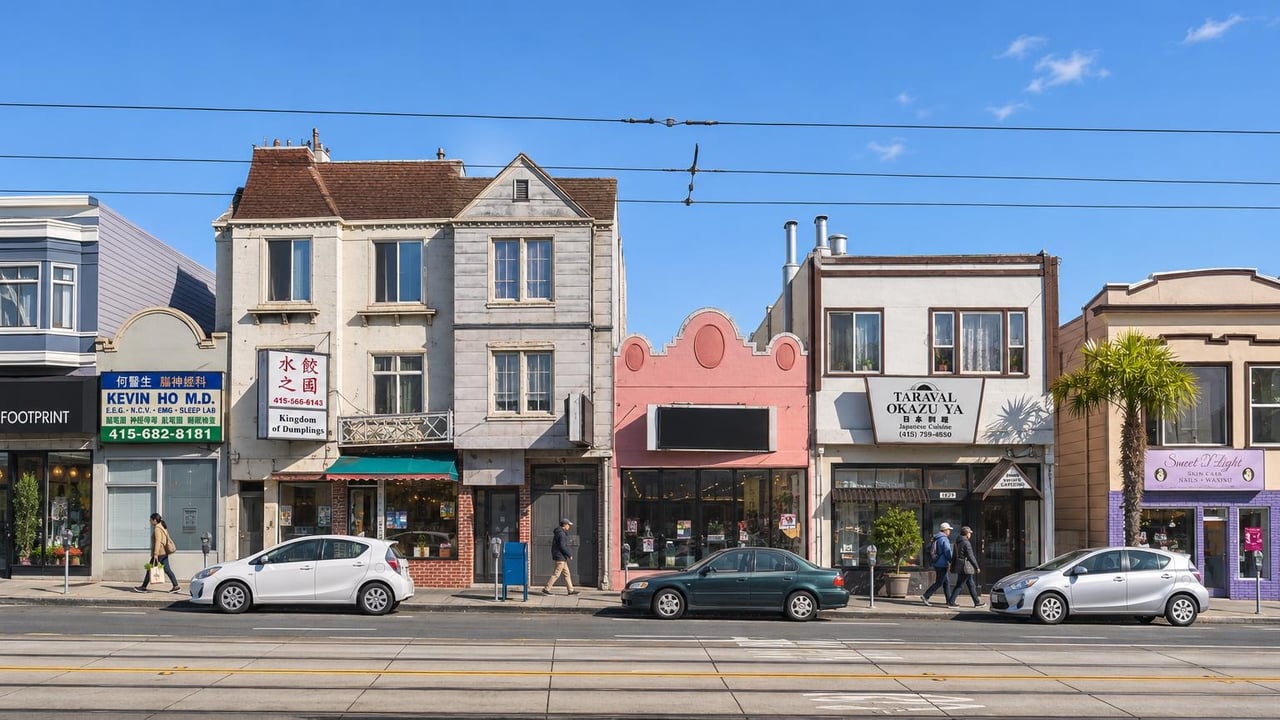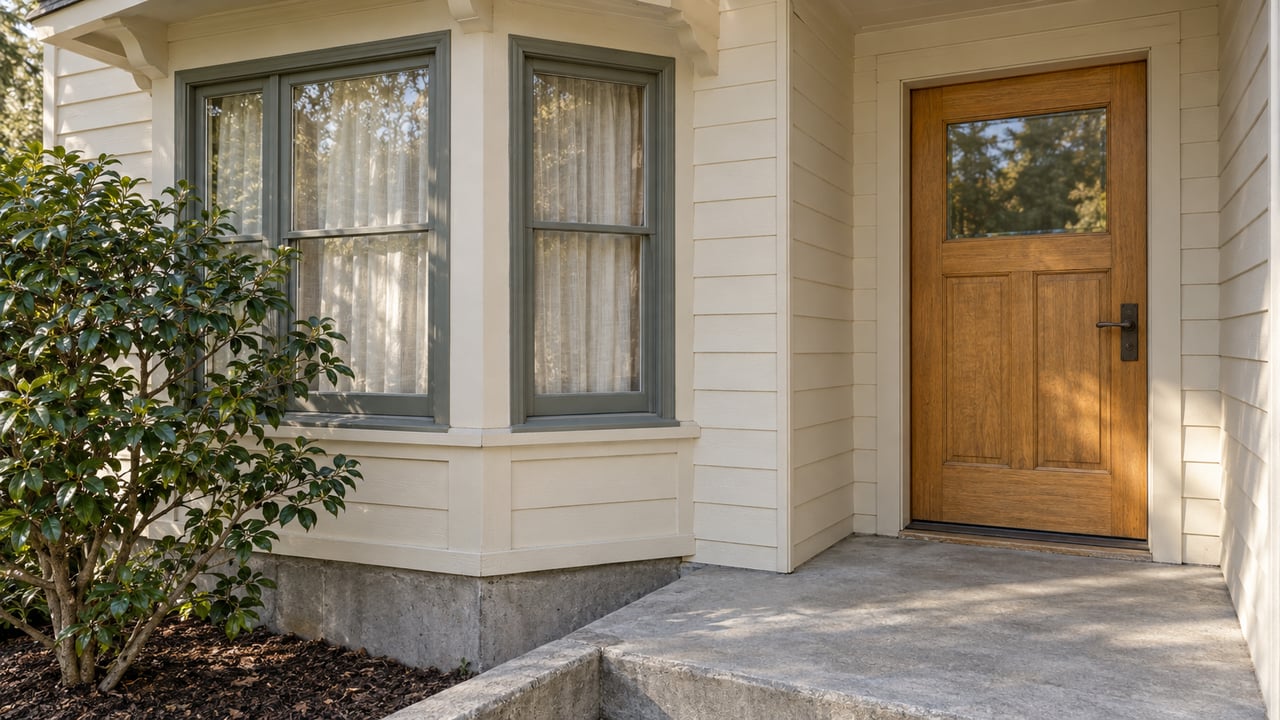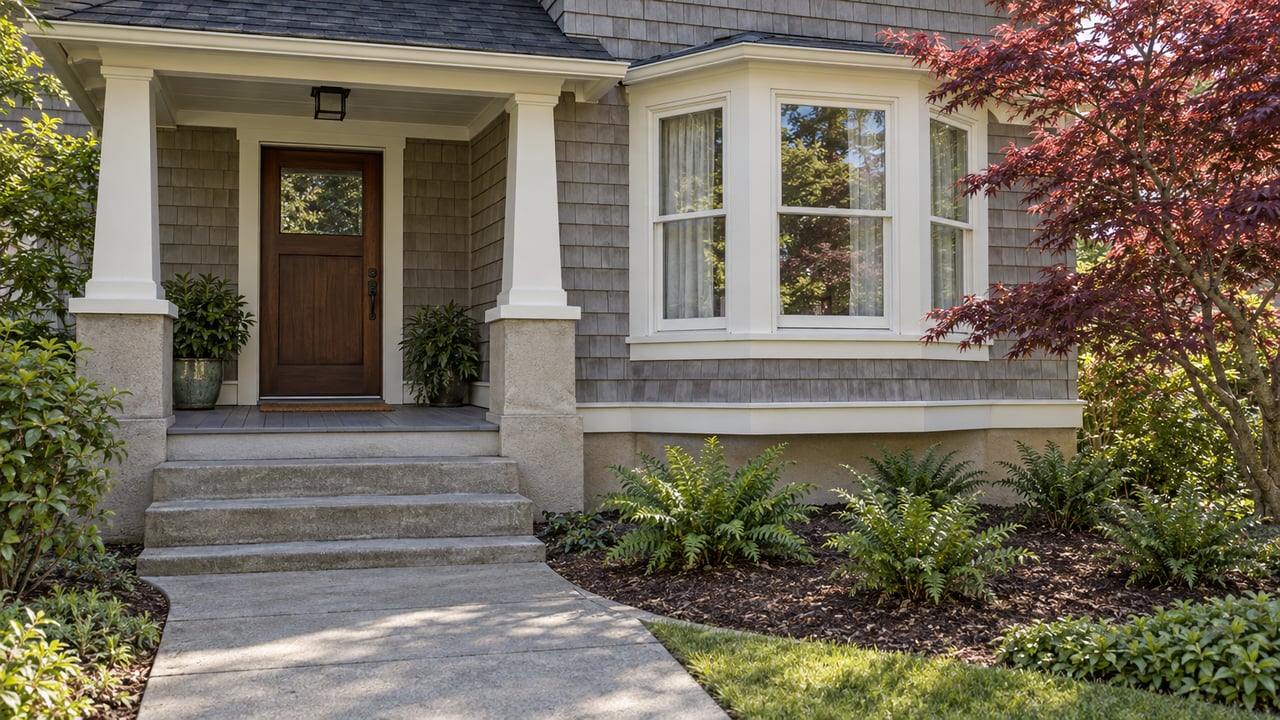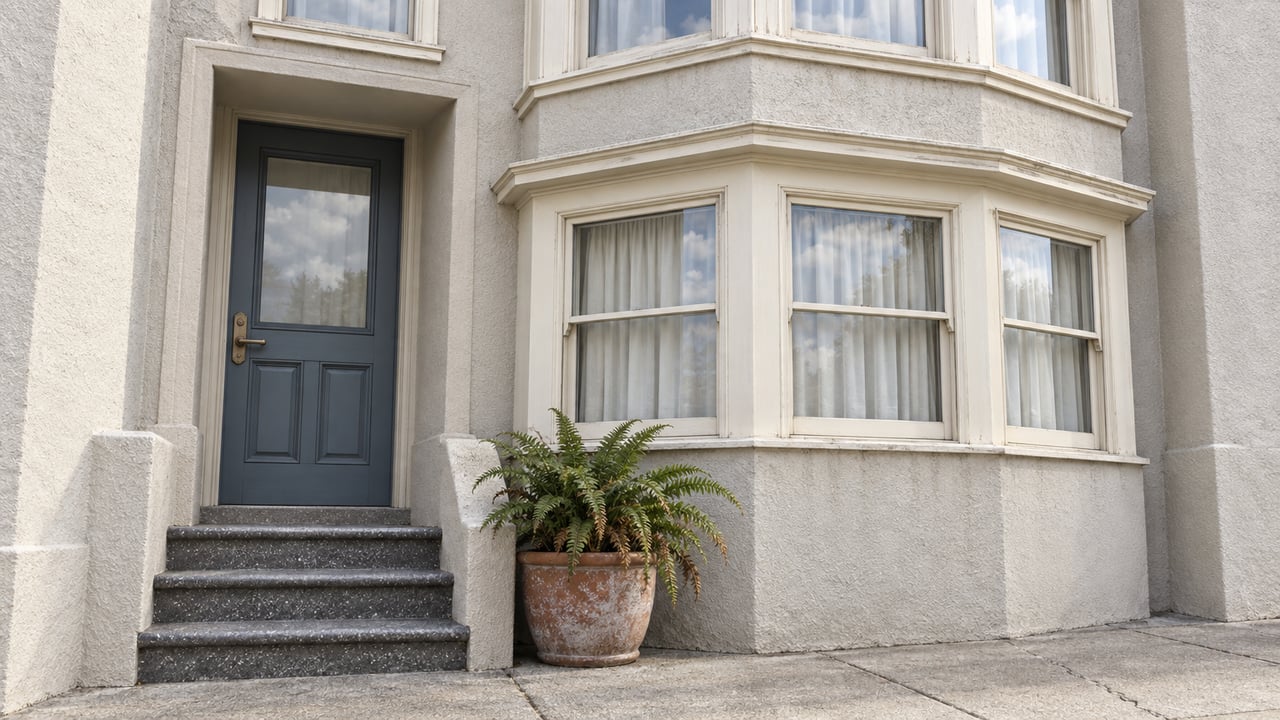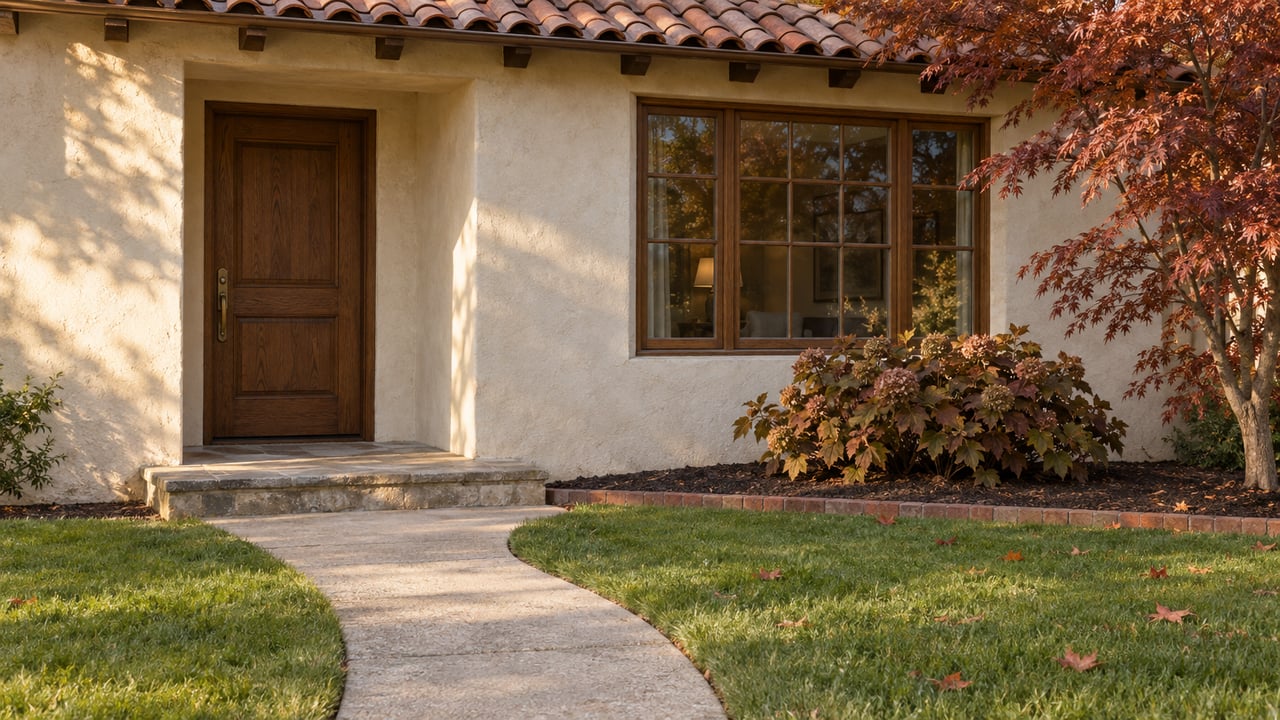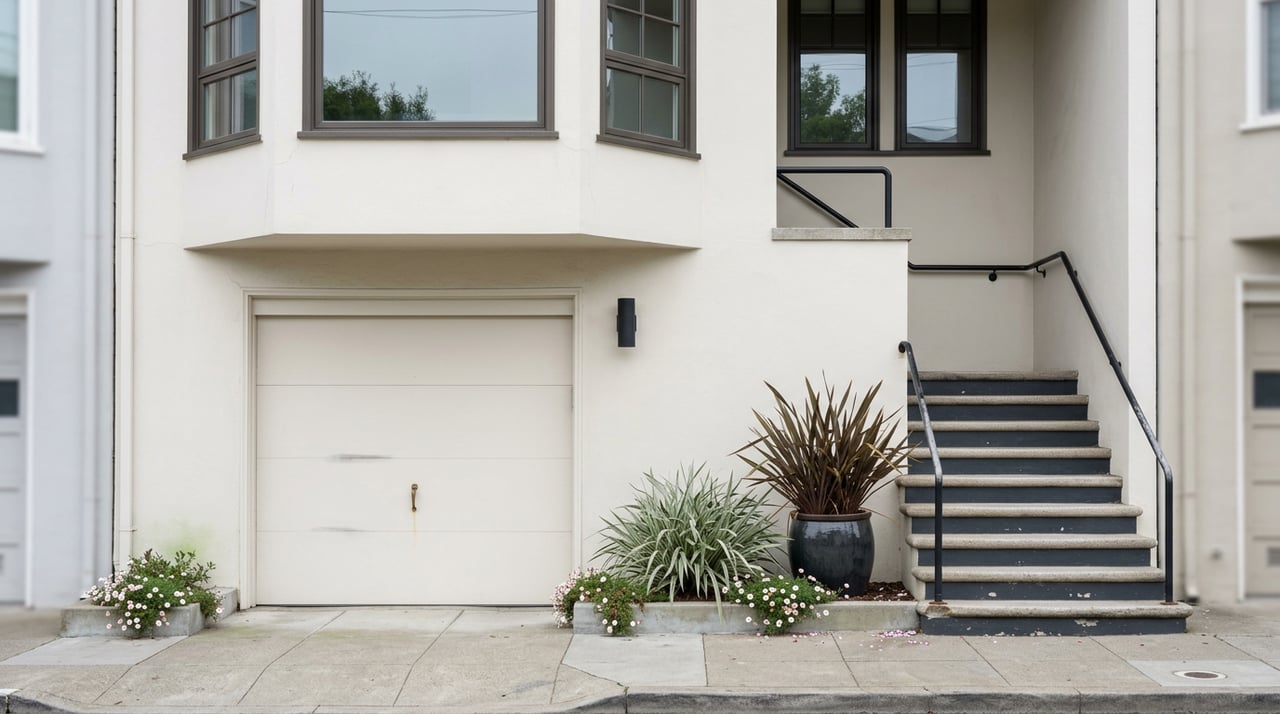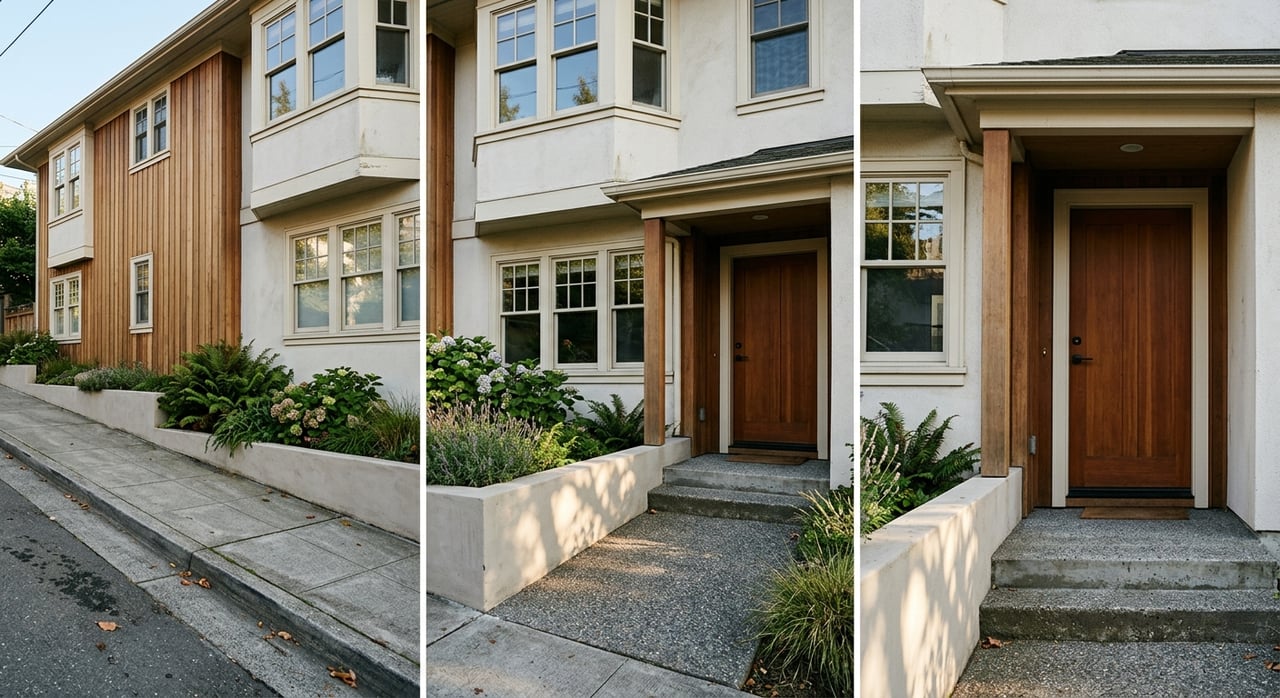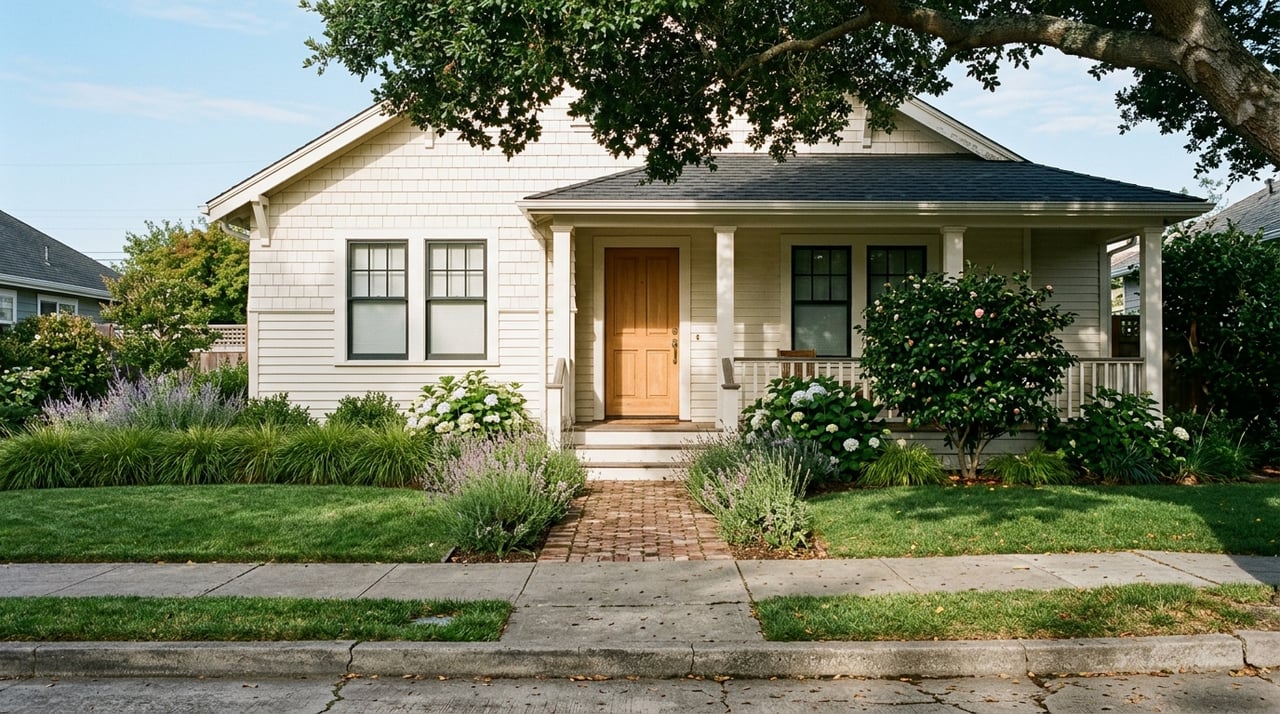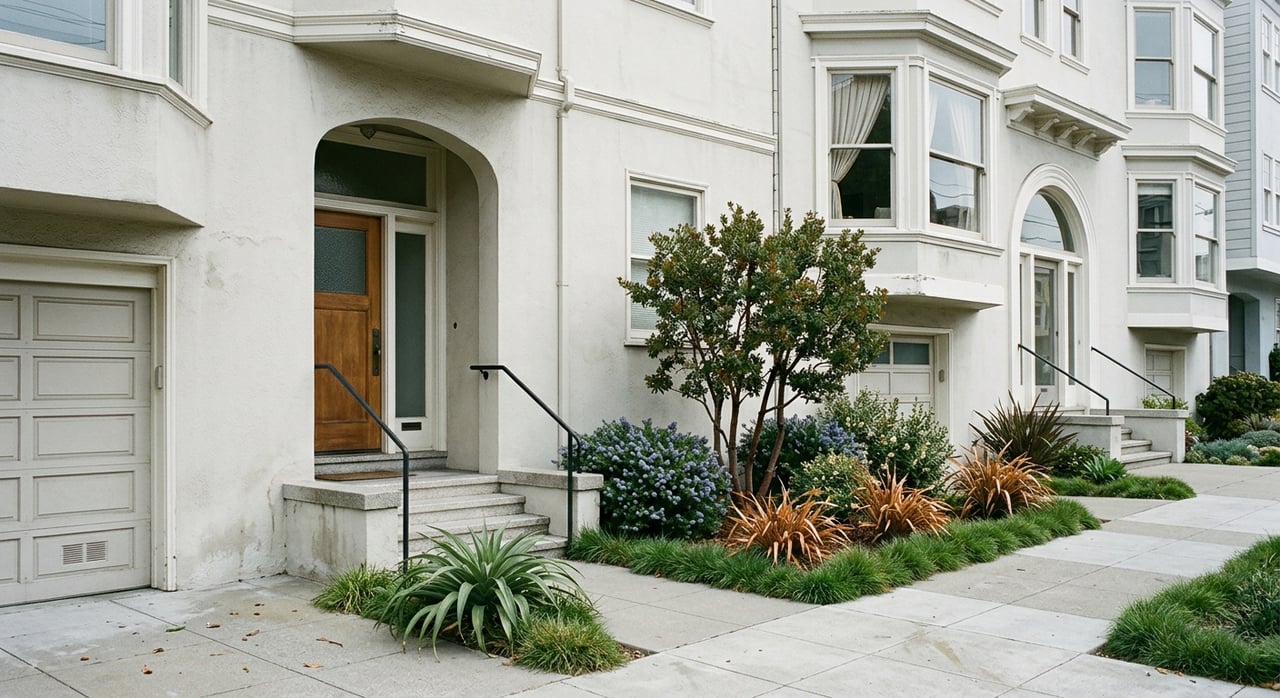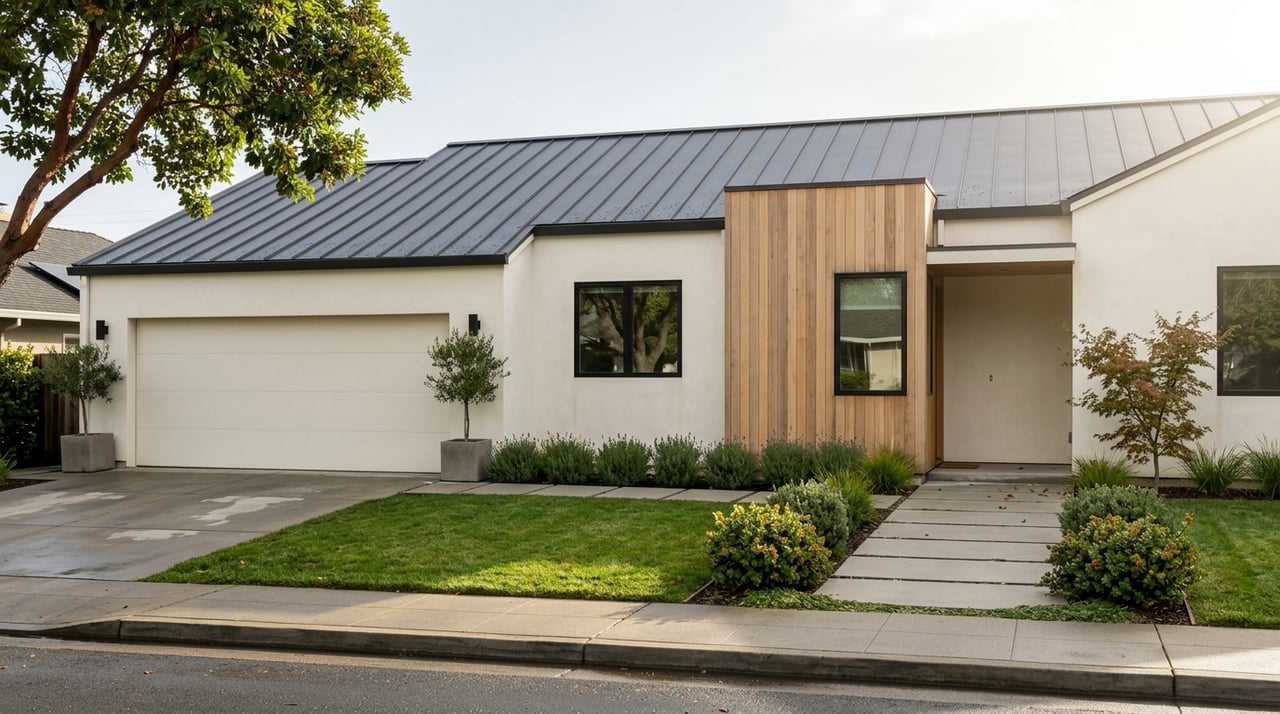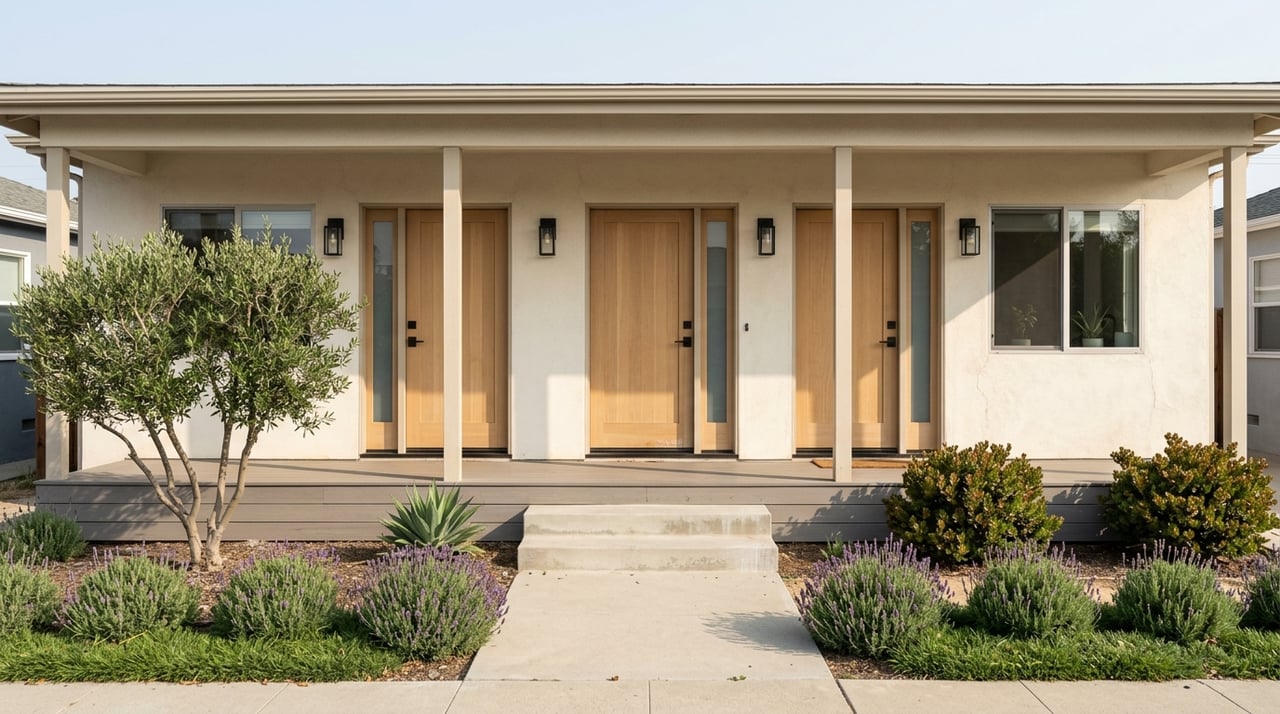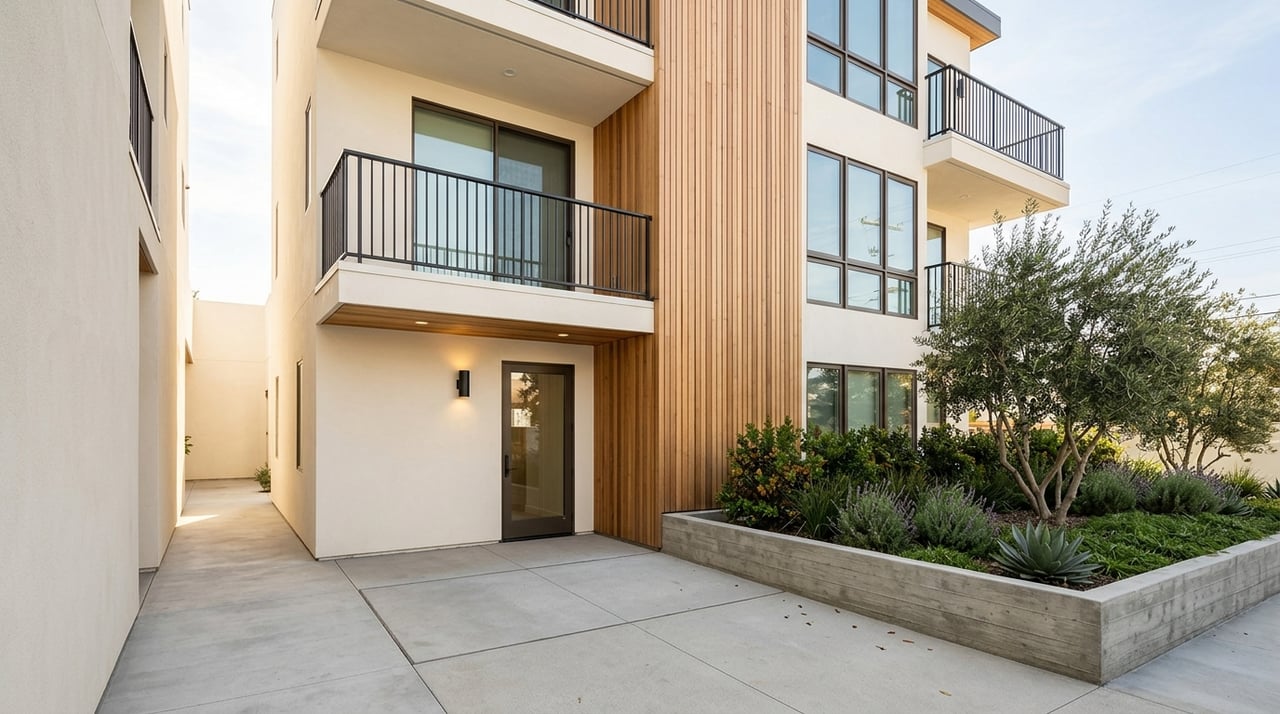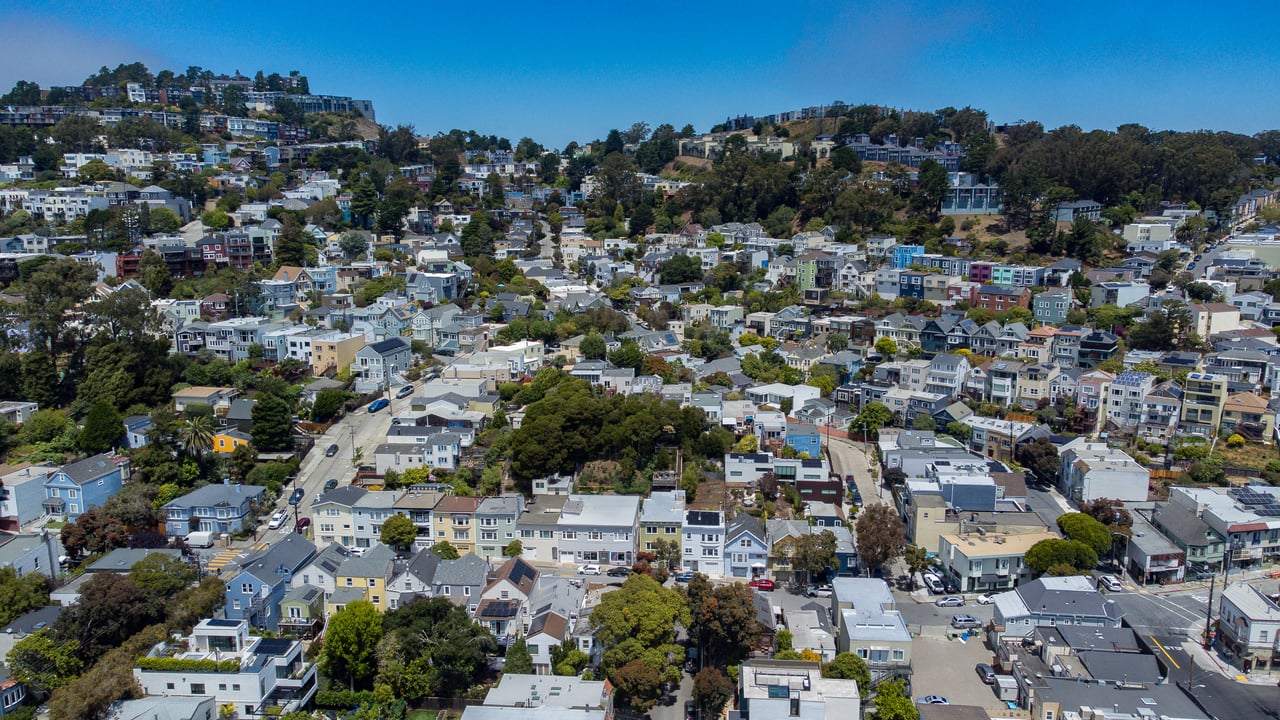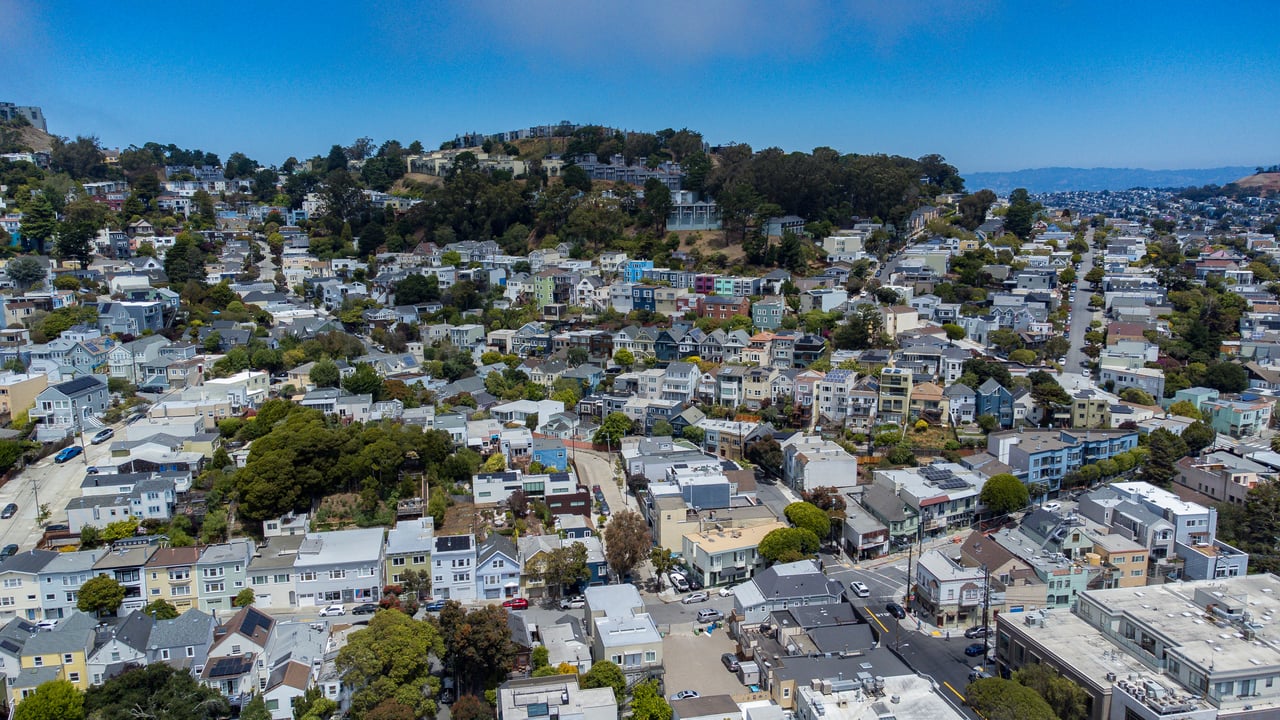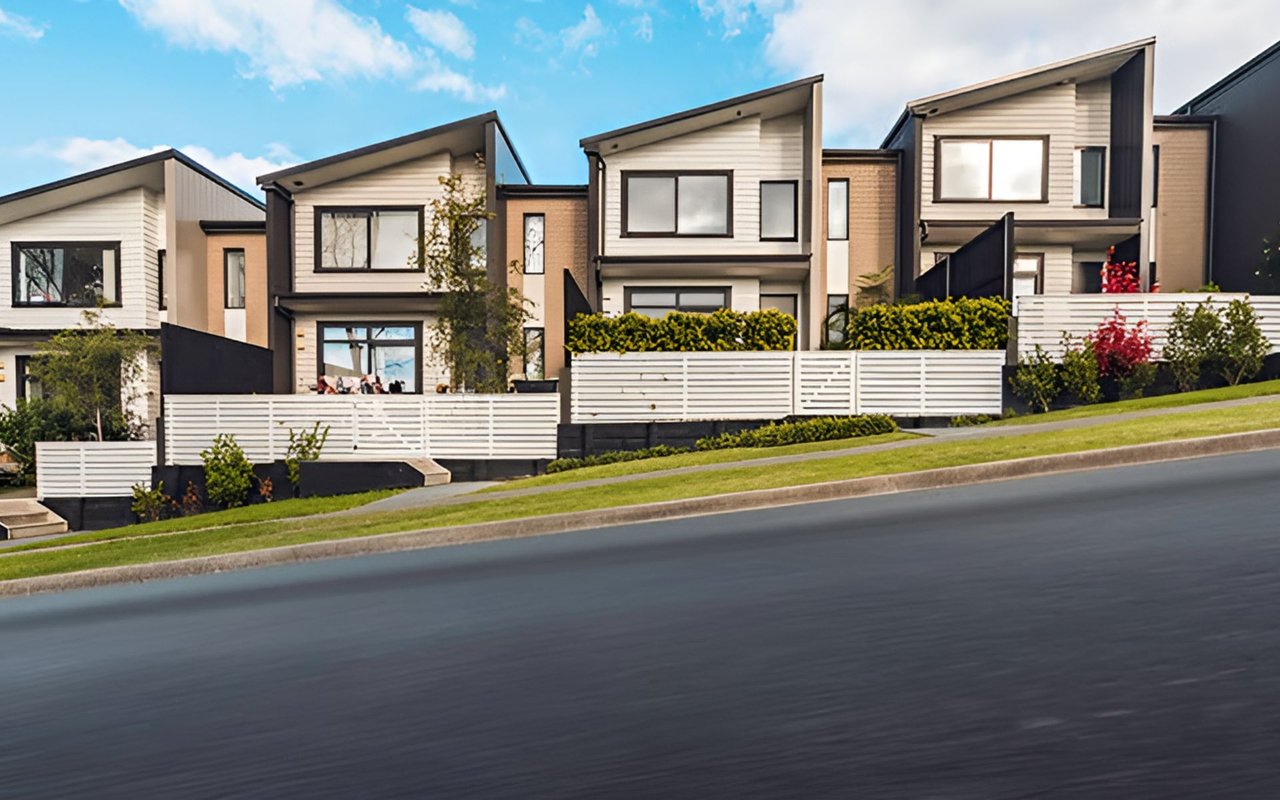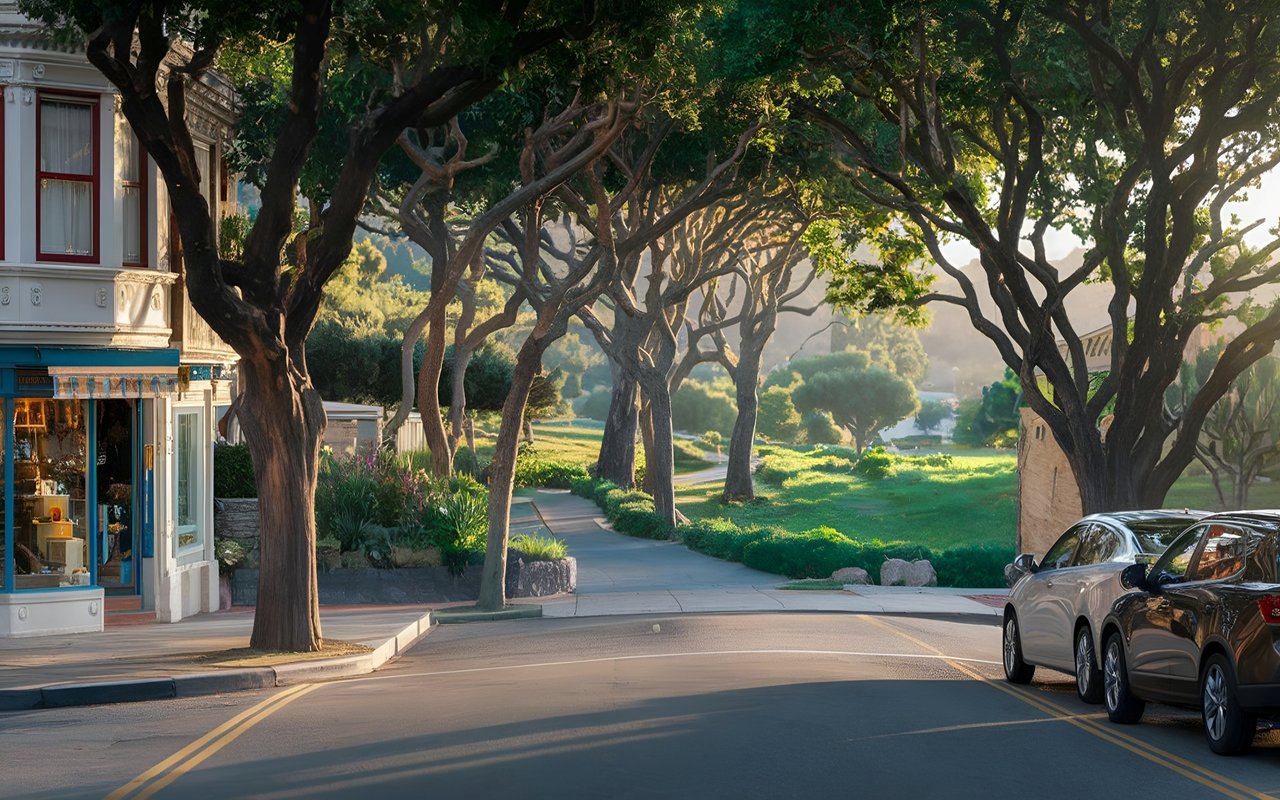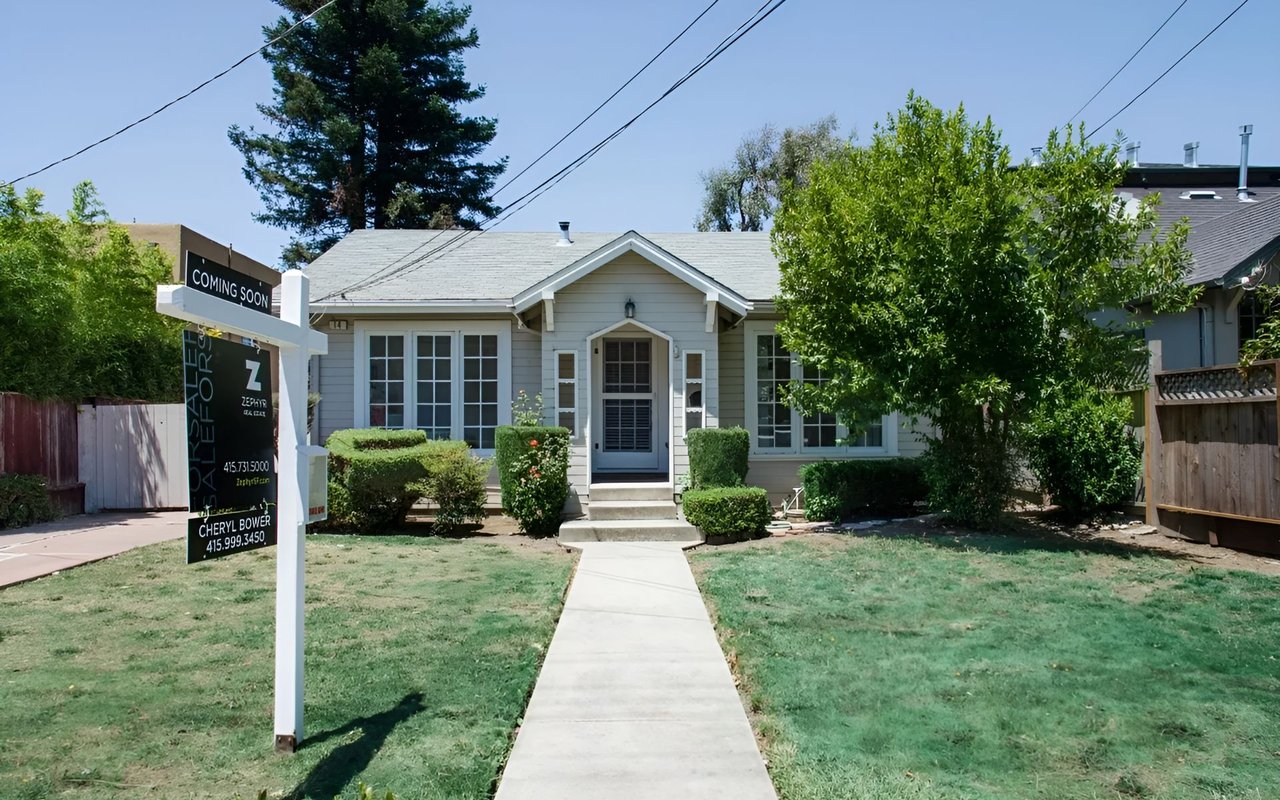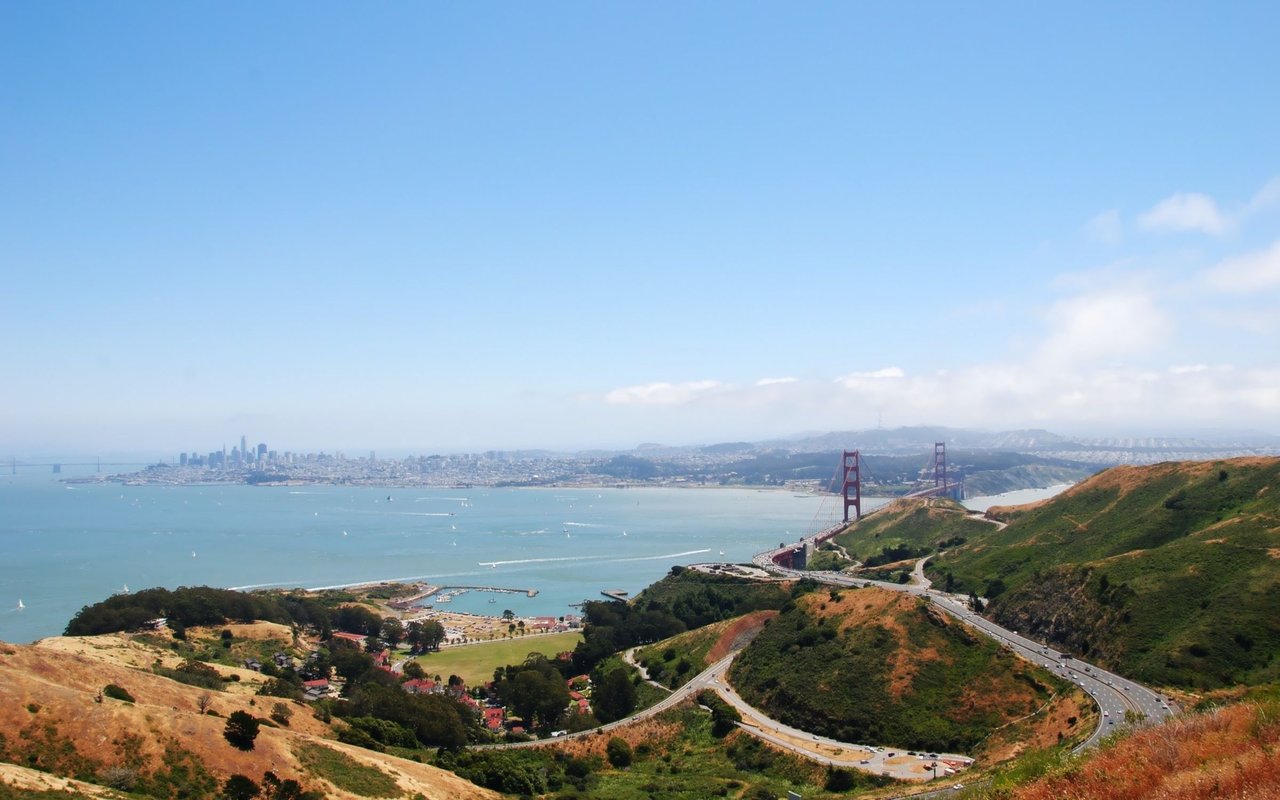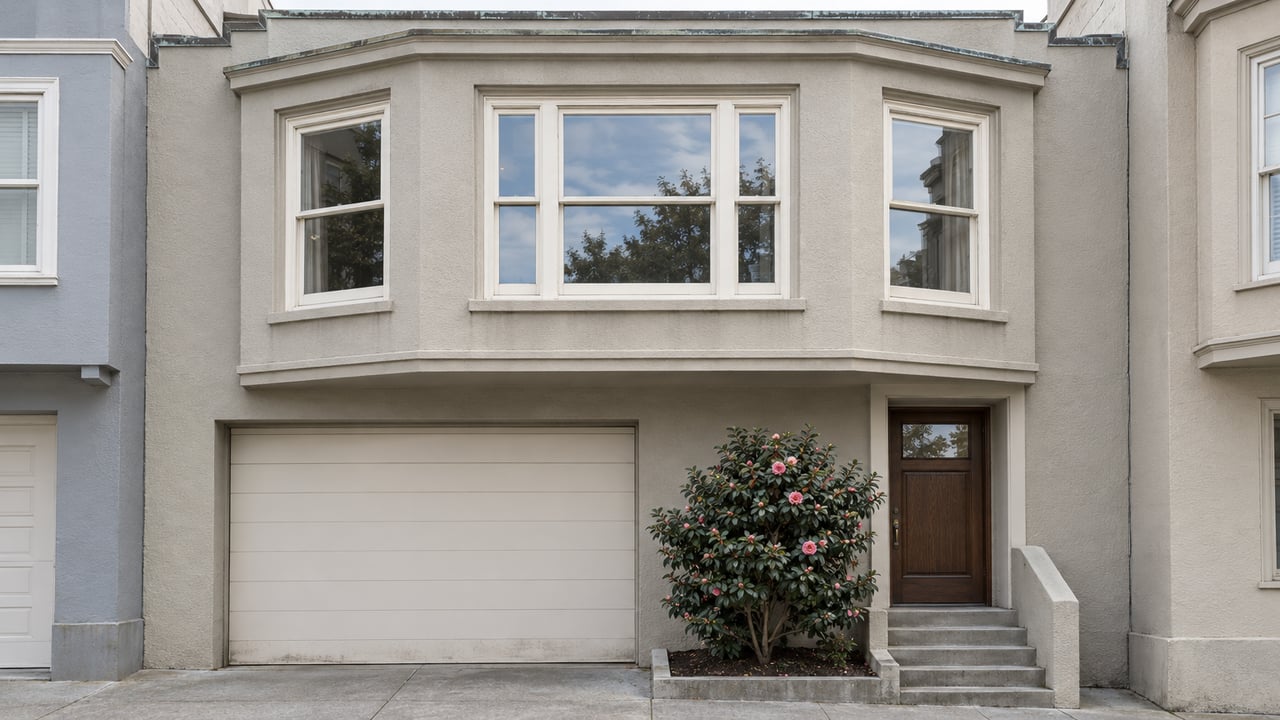
On Irving Street in the Inner Sunset, at 2513, sits a surface parking lot that once belonged to Police Credit Union. Across the street is 2550 Irving, a seven-story building from TNDC whose 90 affordable homes were fully occupied by July 2026. The parking lot now has a preliminary application for nine market-rate apartments in three four-story buildings. That filing invokes San Francisco's Family Zoning Plan, the rezoning that took effect citywide on January 12, 2026.
In April 2026, a listing reported by Hoodline marketed the 0.17-acre site as shovel-ready, with the lot merger complete and an SB 423 entitlement package in hand. That package dates from an earlier, smaller plan for eight units. The asking price was $1,950,000. That figure is the most useful number in this whole debate for anyone shopping for a house in the Sunset. A merged corridor lot pitched to builders as ready to go was listed for about what one ordinary Sunset house sells for.
A shovel-ready lot, priced like a house
San Francisco MLS data published through the San Francisco Association of Realtors' stats portal puts the median single-family sale price in District 2 at $2,010,000 for September 2026. That figure covers three months of activity and is up 19.6% from a year earlier. District 2 includes the Sunset and Parkside.
| Price | What it buys | |
|---|---|---|
| 2513 Irving St. lot, April 2026 asking price | $1,950,000 | A merged 0.17-acre site marketed with an SB 423 entitlement package for an earlier eight-unit plan |
| District 2 single-family median, September 2026, three-month figure | $2,010,000 | One existing house |
| Estimated construction cost for the later nine-unit plan | About $6,000,000 | The buildings, before land |
These are rough numbers. The lot price is an asking price, and no completed sale has been reported. Even so, the arithmetic is clear. Spread across the nine homes in the current filing, land at the asking price works out to roughly $217,000 per home. The reported construction estimate adds about $667,000 per home. That puts land and construction alone near $884,000 for each apartment, and the total still leaves out design, fees, financing, and any builder's profit. When a corridor lot marketed as shovel-ready is listed for about the price of one existing house, the market is saying that development potential on Sunset land is not yet worth much more than what already stands there.
The value of a Sunset single-family house today rests on the house, and a big development premium isn't showing up in land prices.
What the plan actually allows on Sunset parcels
The Board of Supervisors adopted the Family Zoning Plan on December 9, 2025, and the mayor signed it on December 12. According to SF Planning, the adopted map follows a few broad rules.
- Major transit and commercial streets: generally 6 to 8 stories.
- Major intersections, transit hubs, and parts of the highest-frequency corridors: generally 9 stories or more.
- Residential blocks off the corridors: generally the existing heights, typically four stories, with residential density caps removed inside that envelope.
The Planning Director's bulletin on Housing Choice-SF, the optional local program that comes with the rezoning, adds parcel-level details that matter more to a house hunter than the citywide map does. Projects under the program have no unit-per-lot-area cap. Instead, the building envelope and the required unit mix set the unit count. Corner lots and lots of 8,000 square feet or more can reach 65 feet where the mapped limit is lower. Fully affordable projects get 20 feet above their mapped Housing Choice-SF height. The program excludes projects that would demolish housing on a site with more than two existing rent-controlled units, and projects that would demolish listed historic buildings.
A caution on street-by-street heights: an article that circulated in 2024 listed heights such as 85 feet on parts of Judah, Noriega, and Taraval. Those figures came from a draft map, and SF Planning keeps its adopted December 2025 maps separate from the earlier drafts. To learn what a specific Irving or Taraval parcel allows, check the adopted map for that parcel.
The pipeline, nine months in
Permission has been in place since January. The filings have not kept pace. On August 8, the San Francisco Chronicle reported that seven projects had been proposed citywide since the rezoning took effect, adding fewer than 40 homes to the pipeline. None of them was in the Sunset. The 2513 Irving filing came ten days later.
Even 2513 Irving is less of a Family Zoning story than it first looks. An earlier 2025 application for the same site proposed eight units in three stories under SB 423. The nine-unit figure in the new filing traces to the Family Housing Opportunity Special Use District, a 2023 rule in Planning Code Section 249.94 that sets a nine-unit minimum on sites created by merging three lots in RH-1 zones.
Here are the other recent Sunset proposals, roughly from smallest to largest:
- 1828 25th Avenue, filed in March 2026, would split an existing house into a two-bedroom unit and a three-bedroom rear ADU. SF YIMBY's report does not say the project uses Family Zoning.
- 1956 Great Highway got formal permit filings on October 1 to replace a 1930s house with two four-story duplexes, four three-bedroom apartments in all. No construction timeline has been reported, according to SF YIMBY.
- 1234 Great Highway, a 199-unit affordable project, went on extended hold in January over financing. TNDC and Self-Help for the Elderly told the San Francisco Standard they would seek funding in 2027 and could start construction in early 2028 if that funding comes through.
- 2700 Sloat Boulevard was proposed as a 24-story, 682-unit project in a November 2025 submission that relied on state density bonus waivers, not the new local zoning, according to the Richmond Review/Sunset Beacon.
Most of this activity is small infill: a house split in two, a single lot rebuilt as duplexes, a merged parking lot. The large projects are either waiting on money or moving under other laws.
Why the cranes haven't come
The Chronicle traced the slow start to the same forces that have stalled market-rate construction since the pandemic, namely rising construction costs and high interest rates. It contrasted this rezoning with Rincon Hill, Central SoMa, Market-Octavia, and the Eastern Neighborhoods, where developers lined up sites as soon as the new rules took effect.
Planning Department Chief of Staff Dan Sider told the Chronicle that inquiries are coming in. Some are for projects much larger than the ones already filed, including corridor sites on Geary Boulevard in the Richmond.
"We've had a multigenerational hole in housing production, and it's going to take time for construction to catch up," Sider told the Chronicle.
In the same San Francisco Chronicle report, Witt Turner, the Housing Action Coalition's San Francisco organizer, called the current period a "digestion period," with owners meeting architects, general contractors, and lenders. Bora Ozturk of March Capital Fund told the Chronicle his firm is "very seriously analyzing a few sites" on transit corridors and expects some projects to pencil out.
This explains the $1.95 million asking price. A lot is worth what a builder can afford to pay after covering construction, financing, and profit. While those costs stay high, the extra height on the map is worth less than it looks.
Two court dates over the map
The rules themselves are also still being challenged in court. In January, Neighborhoods United SF, Small Business Forward, and two individual petitioners filed a CEQA suit in San Francisco Superior Court asking for more environmental review and for the approvals to be undone or paused, KQED reported. In February, the Chronicle reported a second suit from the opposite direction. California Housing Defense Fund, YIMBY Law, and Californians for Homeownership argue that the plan allows too little housing and improperly limits state-law incentives.
As of a September 2 update from the law firm Coblentz Patch Duffy & Bass, the CEQA case's next step was a case management meeting at the end of September. The pro-housing suit's first merits hearing is scheduled for November 18, 2026. The firm noted that a city loss could lead a court to set aside or suspend the plan. Because the rezoning was required to meet the city's Housing Element obligations, that could also open San Francisco to builder's remedy projects.
For a builder deciding whether to spend $6 million, that uncertainty is one more reason to wait. It is also part of why development potential on a Sunset parcel trades at a discount for now.
Reading a Sunset house with the new map in mind
House prices across the Sunset are still being set by demand for houses. The California Association of Realtors' August 2026 report put San Francisco County's single-family median at $1,875,000 for that month, up 25.0% from August 2025. Median time on market was 34 days, and the unsold inventory index was 1.3 months. That is a tight market, and nothing in the filings above suggests the rezoning caused it.
Where the new map matters is at the level of a single parcel, and it cuts both ways. A house on a corridor, on a corner, or beside a large lot sits next to land that now allows more height and more units. The Chronicle's report on 230 Anza Street in the Richmond showed how that can surprise neighbors. Planning Commission President Amy Campbell called the approved eight-story condo building a "poster child" for the plan and described neighbors' height concerns as "the growing pain of executing the Family Zoning plan." On interior blocks, the envelope typically stays at four stories.
During due diligence, the adopted map and the Housing Choice-SF rules tell you what the parcels around a house could hold. The pipeline and the 2513 Irving asking price give a sense of how quickly anyone is likely to build it.
FAQ
Did the Family Zoning Plan raise Sunset home values? No reported analysis isolates a rezoning effect on Sunset house prices. The best available signal is indirect. A merged Irving Street lot, marketed as shovel-ready and now carrying a preliminary nine-unit application, was listed in April 2026 at $1,950,000. The September 2026 District 2 single-family median was $2,010,000.
Can a six-story building go up on an interior Sunset block? SF Planning describes off-corridor blocks as generally keeping existing heights, typically four stories, with exceptions for certain corner and opportunity sites. Under Housing Choice-SF, eligible corner lots and lots of 8,000 square feet or more can reach 65 feet.
Is the plan final? It has been in effect since January 12, 2026. Two lawsuits are pending, and the first merits hearing in one of them is set for November 18, 2026.
If you own in the Sunset, or are weighing a house near Irving, Judah, Taraval, or Sloat, it helps to know what the adopted map allows on and around that parcel. Cheryl Bower can walk you through how that, and today's District 2 sales, bear on your home's value. Start with a Home Valuation request.
This article is general information, not legal, tax or financial advice. Consult a qualified professional about your situation.